
Russian vs Western Bracing: Understanding the Two Systems of Pressure and Stability
Strength Without Breaking Series East vs West
Coach Gabe
5/9/20268 min read


Introduction to Bracing Techniques
Bracing techniques play a pivotal role in fitness and strength training, serving as fundamental strategies to enhance performance while safeguarding the body from potential injuries. Two predominant systems of bracing techniques are recognized in the fitness community: the Russian and Western methods. Each of these systems embodies unique principles and approaches aimed at achieving core stability, which is essential for executing various exercises effectively.
The concept of core stability involves the engagement of the muscles in the abdominal area and lower back to create a stable base for movement. Proper bracing not only enhances strength and power during workouts but also significantly reduces the risk of injuries associated with improper form. The Russian bracing technique emphasizes a high degree of intra-abdominal pressure, focusing on deep diaphragm engagement and pelvic positioning. In contrast, the Western approach often incorporates a more shallow breathing style while prioritizing overall body tension and alignment.
Understanding these bracing techniques is crucial for both novice and experienced athletes, and trainers alike. They provide the foundation for executing weightlifting movements, functional exercises, and athletic activities. Moreover, mastering the distinctions between the Russian and Western methods facilitates personalized training regimes, catering to individual biomechanics and fitness objectives. As we delve deeper into the nuances of each technique, it becomes clear that both have their merits and applications within varied contexts of fitness training.
Emphasizing the importance of effective bracing techniques not only assists in optimizing performance but also reinforces the necessity of integrative practices that prioritize overall health and stability in a training program. In the subsequent sections, we will explore the specific characteristics and advantages of both Russian and Western bracing systems in detail.
The Concept of Pressure in Bracing
The concept of pressure in bracing is fundamental to understanding how stability is achieved in various physical movements, particularly in strength training. This pressure, akin to inflation within a tire, is generated by the body to create a solid foundation in all directions—360 degrees, to be precise. This internal pressure is crucial as it enhances performance during lifts and other physical activities by providing a stable core.
At the heart of this mechanism is intra-abdominal pressure (IAP). This refers to the pressure within the abdominal cavity, which serves multiple vital functions during physical exertion. When we brace our core, the diaphragm and the muscles of the abdominal wall contract, creating a tight enclosure that effectively increases IAP. This action supports the spine and pelvis, forming a protective barrier around critical structures, allowing for safer and more effective weight lifting.
Moreover, the role of IAP extends beyond mere safety. Enhanced intra-abdominal pressure also facilitates the transfer of force from the lower body to the upper body and vice versa, leading to a more efficient lifting technique. As pressure builds, the stability of the trunk is markedly improved, enabling athletes to exert greater force in their movements. This biomechanical advantage is especially notable in exercises such as squats or deadlifts, where maintaining an upright posture while lifting substantial weights is paramount.
In conclusion, understanding the role of pressure through mechanisms like intra-abdominal pressure in bracing not only highlights its importance in stability but also underpins its significance in improving athletic performance. Strength training practitioners and athletes alike can benefit from implementing effective bracing techniques to maximize their lifting efficiency and safety.
Russian Bracing: The Art of Breathing and Pressure Management
The Russian style of bracing is a nuanced approach to managing intra-abdominal pressure, which plays a crucial role in enhancing stability during various weightlifting exercises. This technique stems from the need to create a firmer core, allowing athletes to lift heavier weights more safely and efficiently. At its core, Russian bracing emphasizes the importance of breath control, specifically advocating techniques that enable lifters to breathe into the back rather than merely expanding the abdomen. This method effectively increases intra-abdominal pressure and stabilizes the spine, resulting in improved lifting mechanics.
*Coach Tip: Stop what your doing. Stand up. Good. Now Stack your ribs down over your pelvic floor and take a breath and force the air into your spine.. 1st! Did you feel the back? If you did great if you didn't keep at it till you do. Feel back inflate first, then obliques, then belly.
Historically, the Russian approach has been championed within the competitive weightlifting community, where the need for optimal pressure management is essential for success. The principles behind Russian bracing can be traced back to the training philosophies developed by Soviet coaches, who recognized that a stronger core translates into better performance outcomes. By integrating this technique into their training regimes, athletes have reported noticeable improvements in lift efficiency and reduced risk of injury, particularly for powerlifters and Olympic weightlifters.
In practice, applying Russian bracing requires conscious effort and awareness of one's breathing patterns. By focusing on inhaling deeply and directing the breath into the back, lifters create a supportive, rigid structure that aids in maintaining posture and form during lifts. This practice not only enhances stability but also encourages greater control of the barbell, facilitating a more powerful execution of lifts. Moreover, the application of Russian bracing extends beyond competitive settings; recreational lifters can also benefit from adopting these breathing techniques to bolster their training outcomes.
Western Bracing: Tension and Structural Stability
The Western approach to bracing places a significant emphasis on the principles of tension and structural stability within the body. This methodology encourages athletes and individuals engaged in physical activities to consciously activate their muscles in a way that promotes optimal alignment and increases tension throughout various muscle groups. By achieving this state of tension, individuals not only enhance their structural integrity but also improve their overall performance, particularly in competitive scenarios.
In practical applications, Western bracing involves specific techniques aimed at engaging the core and stabilizing major joints. A common practice is the use of controlled breathing, which facilitates better intra-abdominal pressure and assists in maintaining a rigid trunk. This trunk stiffness is crucial for power transfer during dynamic movements, allowing for greater efficiency and reduced risk of injury. Moreover, the emphasis on alignment ensures that athletes maintain proper body mechanics, which can provide a significant performance advantage.
Research indicates that athletes who effectively utilize Western bracing techniques can achieve enhanced stability during high-intensity actions, contributing to improved lifting mechanics in weightlifting or increased agility in sports such as football, soccer or basketball. The pivotal role of tension in the bracing system creates a foundational connection between the athlete’s mind and body, thereby fostering improved proprioception and body awareness. In competitive settings, this heightened state of readiness and stability allows for better control and facilitation of movements, which ultimately impacts performance outcomes.
*Coach Notes: Western bracing is wonderful but if you read carefully something should have jumped out at you.. did you see it? ok no more suspense lets break it down. The West focuses on muscle structure tension for support and the East focuses on breath pressure. That it....... Now indulge me for a second if powerlifting and Olympic lifting is more associated with the East is it safe to assume that athletic performance is more attributed to the West. Ok... no sale pitch here, but lets break this down we want to get strong, we have a few amongst us who want athleticism but most want strength, power, and force.. So you see the obvious choice a pressure based brace versus and tension based braced.
Overall, embracing the Western bracing framework provides athletes with valuable tools to enhance their performance through deliberate muscle activation and effective tension management. By integrating these strategies into training regimens, individuals can not only optimize their physical capabilities but also minimize the likelihood of injuries related to improper movement mechanics and inadequate structural support.
Comparative Analysis of Russian vs Western Bracing
In the field of physical training and sports performance, bracing serves as a critical mechanism for stabilizing the body during various movements. The Russian and Western bracing systems represent two distinct philosophies towards achieving optimal pressure and stability. One of the primary differences lies in their approach to muscle engagement and the role of intra-abdominal pressure.
The Russian bracing method emphasizes a holistic approach, promoting full-body tension and utilizing the diaphragm to create intra-abdominal pressure. This technique encourages athletes to engage not only their core muscles but also the limbs and torso as a unified system. It is particularly useful in scenarios that require maximum explosiveness and power, such as Olympic weightlifting, powerlifting, or combat sports. Athletes employing this system often report enhanced overall stability and control during dynamic movements, allowing for better performance in high-intensity situations.
Conversely, the Western bracing technique tends to focus on isolating the core muscles, advocating for a more structured approach to intra-abdominal pressure. This method encourages lifters to maintain a rigid spine and maximizes torque at specific joints, which can be especially beneficial in strength training and some powerlifting contexts. It is often preferred by athletes aiming for improved strength in controlled environments, such as during squat or deadlift exercises, where precision and alignment are crucial. But also highly involved in movement dynamics.
Both bracing systems have their advantages and disadvantages depending on lifting goals and individual body mechanics. Athletes with a strong background in traditional lifting may find Western bracing more intuitive, while those engaged in explosive power generated sports may benefit from the Russian system. Ultimately, the selection of a bracing technique should be informed by the specific context of the movement, the underlying mechanics of the athlete, and the desired outcomes.
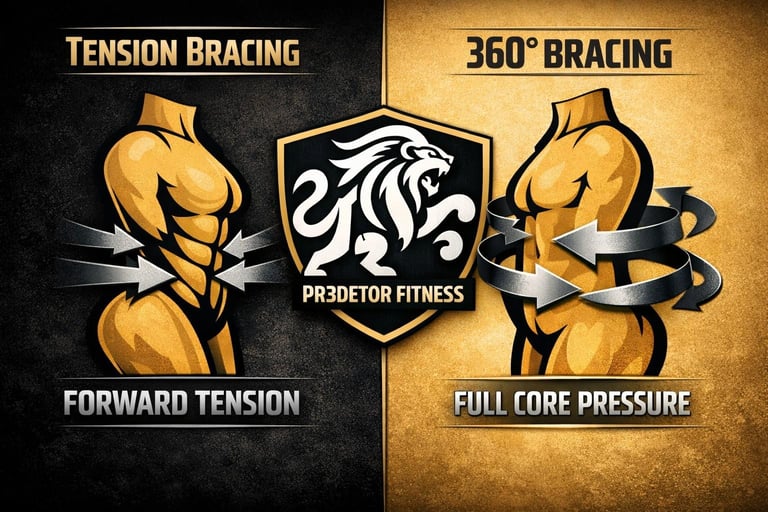
*Coach Note: Notice in the illustration one provides almost like receiving a punch tension to the gut the other provides 360 degrees of pressure like tire.
Pros and Cons of Each Bracing Technique
The choice between Russian and Western bracing techniques can significantly influence performance outcomes and injury prevention in athletic and strength training contexts. Each method presents unique advantages and disadvantages that should be carefully considered by athletes and coaches alike.
Starting with Russian bracing, one of its primary advantages is its emphasis on maintaining intra-abdominal pressure. This technique enables athletes to create a robust support system for the spine, offering necessary stability during heavy lifts. Moreover, it is often viewed as more effective for sports requiring sudden bursts of power, such as Olympic lifting, powerlifting, combat sports, and sprinting. However, the Russian system can be challenging to master, particularly for beginners unfamiliar with the concept of bracing and its physiological implications. The complexity involved in learning the timing and execution can deter novice lifters from fully benefiting from this technique.
Conversely, the Western bracing technique is generally easier to learn and implement, making it a more accessible option for novices. Its straightforward nature allows for quicker adaptation to various lifts, allowing athletes to achieve effective stability without extensive training. This can lead to immediate improvements in lifting performance for many individuals. However, one potential drawback of the Western technique is that it may not provide the same level of spinal protection and performance enhancement under maximal loads compared to its Russian counterpart. Athletes using the Western method may also find it less effective when transitioning to complex, dynamic movements that require rapid stability adjustments.
Ultimately, the decision between Russian and Western bracing techniques should consider an athlete's skill level, goals, and specific lift requirements. By weighing the pros and cons of each method, individuals can choose the bracing technique that best aligns with their training philosophy and performance aspirations.
Conclusion: Choosing the Right Bracing Technique for You
In considering the appropriate bracing technique for lifting, it is critical to reflect on individual preferences, as well as specific workout goals. Both the Russian and Western bracing systems offer distinct advantages that can complement various lifting styles. The Russian bracing technique emphasizes maintaining intra-abdominal pressure, which aids in stability and creates a robust core foundation during lifts. Conversely, the Western approach focuses on the alignment of the spine and overall body positioning, providing leverage and balance during complex movements.
Choosing the best bracing system often depends on the specific lifts you are performing. For instance, lifters who engage in heavy squats or deadlifts may find the Russian bracing method beneficial in enhancing their core stability under maximal loads. However, those executing Cross-Fit Drills that require explosive movements might lean towards the Western technique for its emphasis on posture and agility.
It is essential to recognize that no single method is universally superior; therefore, experimentation plays a key role in determining the right fit. Practitioners are encouraged to test both systems in different scenarios, perhaps during varying intensity levels or workout formats, to establish which technique yields the best results for their unique body mechanics. Monitoring how each bracing method affects performance and comfort will provide insights into personal preferences.
Ultimately, whether one opts for Russian or Western bracing, understanding how these techniques serve distinct lifting objectives will empower individuals to maximize their training efficiency. Being nuanced in the approach by assessing personal lifting styles and adapting accordingly will facilitate a more rewarding and effective lifting experience.

PR3DETOR
Tribe-Driven. Archetype-Based. Challenge-Built.
Privacy Policy
(C) 2026 Pr3detor. All rights reserved.
Support: Support@pr3detor.com Built for the Tribe.
LEGAL
About Us