
Master the Hinge: A Strength Guide for Able-bodied and Disabled Athletes
Strength Without Breaking Edition 3 "The Hinge"
Coach Gabe
4/20/20268 min read


Understanding the Hinge Movement
The hinge movement is a fundamental biomechanical action that involves flexion and extension at the hips while maintaining a neutral spine position. This movement primarily engages the posterior chain, which includes the hamstrings, gluteus maximus, and the muscles of the lower back. The hinge is crucial for various strength-training exercises, particularly for athletes seeking to enhance their performance and prevent injuries. Understanding the hinge movement is essential, as it lays the groundwork for safe and effective training regimes.
In essence, the hinge movement allows athletes to efficiently transfer force from the lower body to the upper body while adhering to optimal alignment. A well-executed hinge relies on proper body mechanics, as it promotes stability and balance, which are paramount during dynamic movements such as deadlifts and kettlebell swings. When executed correctly, the hinge can effectively engage multiple muscle groups, thereby maximizing strength development and improving athletic performance.
Additionally, the hinge movement is versatile and can be adapted for individuals with varying abilities, making it relevant in both able-bodied and disabled athletics. The biomechanics involved support a range of modifications, allowing athletes to enhance their performance potential while remaining injury-free. Key points to consider include maintaining a neutral spine throughout the movement and focusing on the hip joint for appropriate range of motion. Training the hinge movement will not only solidify an athlete's foundation for strength training but will also develop coordination, balance, and proprioception, essential components for overall athletic success.
The Importance of the Hinge for Strength Development
The hinge movement is a fundamental pattern integral to both strength training and athletic performance. Mastering the hinge is crucial for athletes irrespective of their physical abilities. This movement primarily targets the posterior chain, which includes muscles such as the hamstrings, glutes, and lower back. By effectively engaging these muscles, athletes can develop significant power and stability, which are essential for various sports.
One of the key benefits of a well-executed hinge is its ability to enhance overall athletic performance. A strong posterior chain contributes to explosive movements, improves running speed, and increases jumping ability. Athletes who incorporate hinge movements into their training regimens often notice enhanced efficiency during competition. This is particularly relevant for athletes involved in sports that require sudden bursts of speed or athleticism, such as sprinting, jumping, or weightlifting.
In addition to performance enhancement, mastering the hinge is vital for injury prevention. Many injuries stem from improper movement patterns, particularly in the lower body. When athletes fail to engage their posterior chain correctly, they may over-rely on other muscle groups, potentially leading to strains and injuries. A well-practiced hinge reinforces proper biomechanics, decreasing injury risk by ensuring that the body employs efficient movement mechanics under load.
Coach Notes: Your body always finds a way to complete the task - even if the pattern is wrong. Guys the weights don't care about your feelings sorry!
the spine takes what the hips should take
the knees take what the glutes should
the shoulders take what the lats should take
Furthermore, there are common misconceptions around strength training among different body types. Some may believe that only certain physiques can benefit from traditional strength exercises. However, the hinge movement is a versatile technique adaptable to various body types and abilities. All athletes, whether able-bodied or disabled, can derive benefits from learning how to hinge properly, making it an essential component of a comprehensive strength training program.
Common Hinge Performance Issues
The hinge movement, a fundamental pattern for both able-bodied and disabled athletes, can often be hindered by several common performance issues. Misalignment during the hinge can result from structural limitations or compensatory movements, which can severely impact overall strength performance. Understanding these issues is essential for effective training and optimal outcomes.
One prevalent issue is spinal flexion, where the lower back rounds during the hinge. This incorrect positioning can stem from tight hamstrings or hip flexors, reducing the range of motion necessary for an effective hinge. Limited dorsiflexion, where the ankle cannot flex properly, is another structural limitation that can disrupt the chain reaction needed for proper hinge mechanics. Athletes may find it challenging to maintain an optimal center of gravity, subsequently leading to inefficient movement patterns.
Another common performance issue involves compensatory movements. Athletes may unconsciously alter their technique, such as leaning excessively forward or using their arms to initiate the movement, thereby reducing the effectiveness of the exercise. These compensations not only detract from performance but can also lead to injury over time due to repetitive strain on specific joints or muscle groups. It is crucial to recognize these compensation patterns early to correct them effectively.
Moreover, improper load management often exacerbates hinge performance issues. When athletes load excessively or without proper form, they can inadvertently reinforce poor mechanics. This creates a vicious cycle of ineffective training that hinders strength development. Addressing these common issues through targeted interventions like flexibility training, strength assessments, and mechanical adjustments can significantly improve hinge performance, promoting a safer and more efficient pathway towards strength gains for all athletes.
Adaptations for Disabled Athletes
For disabled athletes, the hinge movement can be adapted to ensure effective performance and safety. Recognizing the unique needs of each individual is crucial, as disabilities can vary significantly in terms of mobility, range of motion, and strength. It is essential to implement modifications that cater to these differences, allowing athletes to benefit from the hinge mechanics while maintaining their personal capabilities.
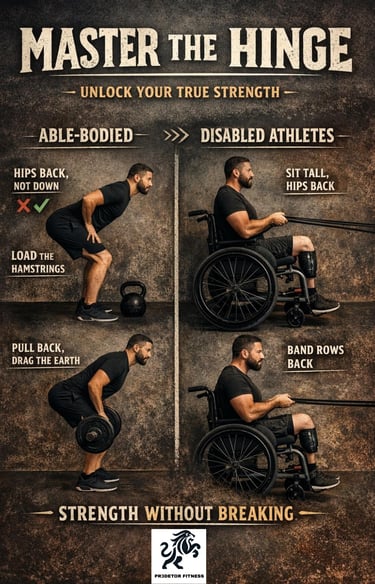
One of the most effective adaptations is the seated hinge. This version provides support and stability, enabling athletes with limited mobility to practice the hinge movement without the risk associated with standing. Athletes can utilize a sturdy chair or bench, allowing them to position themselves comfortably while performing the hinge. The focus should remain on hip hinging rather than bending at the waist, promoting proper muscle engagement and alignment.
In addition to the seated hinge, alternative strategies are essential for athletes with varying disabilities. For instance, using resistance bands can provide a controlled environment to practice the hinge movement without heavy weights. Bands can be anchored at various points, allowing for an adjustable challenge that accommodates individual strength levels. This method can help maintain safety while promoting muscle development and hinging mechanics.
Furthermore, incorporating upper body support during the hinge can benefit athletes with limited lower body strength. For instance, using a wall or grabbing onto the edge of a sturdy table can enhance balance and safety, permitting athletes to focus on executing the movement correctly. Each modification should emphasize maintaining a neutral spine and engaging the core throughout the exercise.
Ultimately, the goal is to create an inclusive training environment where disabled athletes can engage in the hinge movement effectively. By implementing these adaptations, athletes of all abilities can access the foundational benefits of the hinge, fostering strength, stability, and confidence in their athletic pursuits.
Coach Notes: Athletes, you have to redefine "Ability" don't soften it. If you are disabled or hurt or weaker than someone else you don't need pity-you need precison.
shift from can't do - to how can I achieve same result differntly
focus on
force production
stability
control
efficiency
identity over limitations this is where Pr3detor is a leading the charge.
Practical Tips for Mastering the Hinge
The hinge movement is crucial for developing strength and power in both able-bodied and disabled athletes. Mastering this movement involves a keen understanding of body positioning, range of motion, and controlled breathing. Here are some practical tips to enhance your hinge technique.
Begin with proper body positioning: stand with the feet shoulder-width apart. Keep the knees slightly bent and ensure a neutral spine. A common mistake is overextending or rounding the back; focusing on maintaining a straight posture will mitigate injuries. Focus your weight on the heels while initiating the hinge, pushing your hips back as if reaching for a door behind you. This action is crucial for activating the glutes and hamstrings effectively.
Range of motion is another critical aspect. Athletes should practice a hip hinge with various objects. Using a dowel rod or a broomstick can reinforce the importance of maintaining a straight spine. Position the rod along your back so it touches your head, upper back, and tailbone. As you hinge, ensure that the rod remains in contact with these three points to gauge correct form.
Breathing techniques can enhance performance also. Inhale deeply as you prepare to hinge, engaging your core muscles. Exhale steadily when thrusting the hips forward at the end of the hinge, which will provide stability and control during the movement. This method not only aids in the execution of the hinge but also fosters a mindful connection with the body.
For practice, consider incorporating resistance bands or kettlebells as tools. Start with lighter weights and focus on precision before increasing resistance. Both able-bodied and disabled athletes can benefit from utilizing these strategies to build a solid foundation. Through consistent practice, mastering the hinge will become a valuable component of your strength training routine.
Integrating the Hinge into Strength Training Programs
The hinge movement is a fundamental pattern in strength training that can greatly enhance athletic performance for both able-bodied and disabled athletes. To effectively integrate the hinge into training programs, several key considerations should be taken into account, including programming frequency, volume, and exercise selection.
Frequency of hinge-based exercises should be determined by the overall training split and the athlete’s individual goals. Generally, incorporating hinge movements two to three times per week is recommended to promote muscle adaptation while allowing for adequate recovery. Athletes should also listen to their bodies and modify training frequency based on their specific recovery needs.
When considering volume, it is important to tailor the number of sets and repetitions to the athlete’s experience and comfort level. For beginners, starting with two to three sets of 8-12 repetitions allows them to master the technique while developing strength and endurance. More advanced athletes may opt for lower rep ranges with higher weights to build strength. Progressively increasing volume can ensure continuous improvements in strength over time.
Exercise selection is also crucial when integrating the hinge into a training program. There are various exercises that emphasize the hinge pattern, such as deadlifts, kettlebell swings, and hip thrusts. Each of these exercises can be modified to suit different fitness levels and abilities. For instance, using lighter weights or bodyweight variations is effective for beginners or those with mobility constraints, while experienced athletes may benefit from heavier loads to enhance power output.
Ultimately, incorporating the hinge movement into strength training programs requires a thoughtful approach. By considering frequency, volume, and exercise selection, athletes can optimize their training, ensuring that they are strengthening not only the prime movers but also stabilizing muscles, thereby enhancing overall performance and functional capacity.
Success Stories and Case Studies
The hinge movement has proven to be a transformative technique for many athletes, regardless of their physical abilities. Numerous success stories highlight the profound impact mastering the hinge can have on performance, rehabilitation, and overall physical health. One exemplary case is that of John, a seasoned powerlifter who experienced a debilitating back injury. Through focused rehabilitation utilizing hinge mechanics, John not only regained strength but also enhanced his lifting technique. By integrating hinge-focused exercises into his training regimen, he was able to compete again, ultimately setting personal records in his lifts.
Similarly, Sarah, a para-athlete who lost her leg in an accident, provides an inspiring narrative of resilience. Upon her introduction to the hinge movement, Sarah recognized its benefits for her lower body strength and overall stability. With the help of a specialized coach, she adapted hinge exercises to fit her unique needs. As a result, Sarah not only improved her performance in adaptive sports but also began mentoring others facing similar challenges, thereby fostering a supportive community around hinge training.
There are also compelling stories from able-bodied athletes, such as Mark, who incorporated hinge mechanics into his fitness journey after years of neglecting proper form. Understanding the importance of hinge-based movements, Mark transformed his approach, progressing from basic exercises to advanced variations, significantly enhancing strength and conditioning. His story is a testament to the notion that with dedication and the right techniques, anyone can overcome obstacles and achieve their fitness aspirations.
These narratives underscore the versatility and effectiveness of the hinge movement across various populations. By embracing and mastering the hinge, athletes can unlock their potential, enhancing not only their physical capabilities but also their mental resilience. The stories of John, Sarah, and Mark serve as powerful motivators for anyone looking to refine their technique and experience the profound transformations that can result from consistent practice of hinge mechanics.

PR3DETOR
Tribe-Driven. Archetype-Based. Challenge-Built.
Privacy Policy
(C) 2026 Pr3detor. All rights reserved.
Support: Support@pr3detor.com Built for the Tribe.
LEGAL
About Us