Weight Loss vs Muscle Gain: The Illusion of Doing Both at the Same Time
"Illusion"
Coach Gabe
3/11/202610 min read
Why Muscle Gains and Weight Loss are Opposite
At a fundamental level, muscle gain and weight loss involve opposing metabolic processes within the body. Muscle gain requires a caloric surplus, whereby an individual consumes more calories than they expend. This surplus provides the essential energy needed for muscle protein synthesis, which fosters growth and repair of muscle fibers following resistance training. Adequate intake of macronutrients, particularly protein, plays a critical role in this process, as it provides the building blocks necessary for muscle development.
Conversely, weight loss is achieved through a caloric deficit, meaning that an individual consumes fewer calories than are burned. This deficit prompts the body to utilize its stored fat reserves for energy, thereby resulting in fat loss. To facilitate weight loss, it is often recommended to engage in aerobic exercises, which increase the overall calorie expenditure while promoting cardiovascular health. During this deficit, maintaining a sufficient protein intake is crucial to preserve lean muscle mass; however, it is generally challenging to build new muscle under these conditions.
The contrasting roles of different macronutrients in dieting strategies further complicate the simultaneous pursuit of weight loss and muscle gain. While carbohydrates provide energy for workouts, fats are essential for hormonal balance. Finding the right balance can be arduous, especially when trying to achieve both goals at once. Resistance training is vital for stimulating muscle growth, but when combined with excessive cardio aimed at reducing body fat, it can hinder recovery and disrupt muscle-building efforts. This dichotomy highlights the necessity of prioritizing one goal over the other for increased effectiveness.
The Illusion of Doing Both
The belief that one can lose weight while simultaneously gaining muscle is a prevalent misconception in the fitness community. This dual goal often stems from the human inclination toward multitasking, where individuals believe they can efficiently achieve multiple objectives at once. The idea is appealing—who would not want to shed excess fat while simultaneously sculpting a more toned physique? However, the body operates under specific physiological principles that complicate this notion significantly.
When one aims to lose weight, the fundamental requirement is to maintain a caloric deficit. This means the individual must consume fewer calories than they expend, prompting the body to utilize its energy reserves. On the other hand, muscle gain necessitates a caloric surplus, where the intake of nutrients and energy exceeds what the body burns, enabling muscle repair and growth. This foundational contradiction poses a significant barrier to achieving both goals simultaneously.
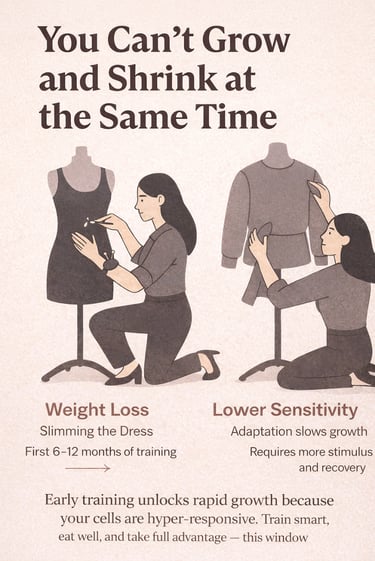
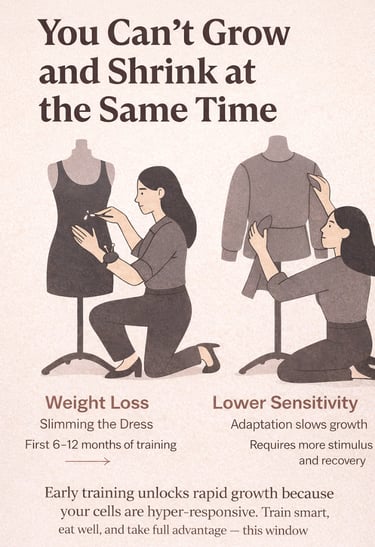
Coaches Notes: "Guys imagine a piece of clothing, picture provided, your asking your body to grow and shrink at the same time." Not happening...... Lets break this down. Trying to lose weight and gain muscle at the same time is like trying to make your clothes smaller while also adding fabric to them.
Losing weight= taking fabric away
Building muscle = like adding fabric on
Anecdotal evidence often perpetuates this illusion; many individuals share their experiences of being able to eat less and still gain muscle. These examples frequently represent exceptions rather than the rule, often involving factors such as genetic predisposition, beginner gains, or incorrect assessments of body composition. Furthermore, psychological influences play a substantial role in this belief. Enthusiasts may convince themselves of their ability to do both due to social pressures, marketing from fitness programs, or personal aspirations tied to idealized body images.
Understanding these misconceptions can aid individuals in setting realistic expectations for their fitness journeys. The pursuit of losing weight while gaining muscle is a challenging endeavor that often requires prioritization of one goal over the other for optimal results. This insight into the limitations of the body is crucial for establishing effective and sustainable fitness strategies.
What Science Says
The relationship between weight loss and muscle gain has long intrigued both fitness enthusiasts and scientists alike. Numerous studies have scrutinized the physiological processes involved in body composition changes, particularly focusing on muscle hypertrophy and fat metabolism. Fundamentally, muscle gain requires a caloric surplus, where the body receives more energy than it expends. In contrast, fat loss necessitates a caloric deficit, creating a situation where the body utilizes stored fat for energy. These opposing goals raise questions about the feasibility of achieving both simultaneously.
Research indicates that performing both weight loss and muscle gain concurrently is, indeed, a challenging task. A pivotal study published in the "American Journal of Clinical Nutrition" indicated that while it is technically possible to build muscle while in a caloric deficit, the extent of muscle hypertrophy is significantly limited. The study suggests that beginning individuals or those returning to exercise after a long hiatus might experience initial gains in muscle while losing fat, thanks to enhanced insulin sensitivity and increased protein synthesis capabilities.
Moreover, numerous fitness professionals emphasize the importance of exercise type and nutrition in this equation. Resistance training plays a crucial role in stimulating muscle growth, while high-protein diets can mitigate muscle loss during caloric deficits. However, expert consensus largely indicates that pursuing fat loss and muscle gain simultaneously often leads to suboptimal results for both goals.
In conclusion, while there exist scenarios where individuals can experience muscle gain alongside weight loss, such phenomena are generally predicated on factors such as training experience, hormonal response, and nutritional strategies. As research continues to evolve, the prevailing scientific opinion maintains that it may be more efficacious to focus on one goal at a time to optimize body composition effectively.
What is Possible Naturally
Natural bodybuilding and weight loss often present individuals with expectations that may not align with reality. The pursuit of simultaneous fat loss and muscle gain can be particularly challenging. However, there are scenarios in which individuals may achieve both fat reduction and muscle development, especially certain populations such as beginners or those returning to training after a significant hiatus.
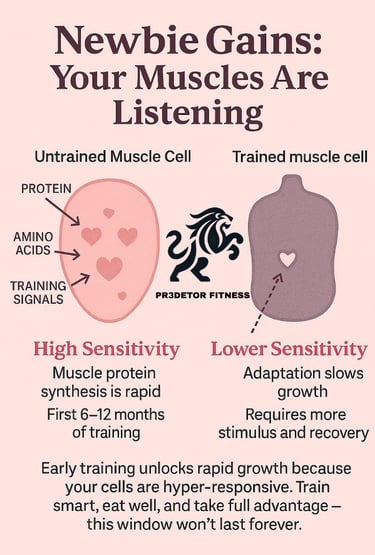
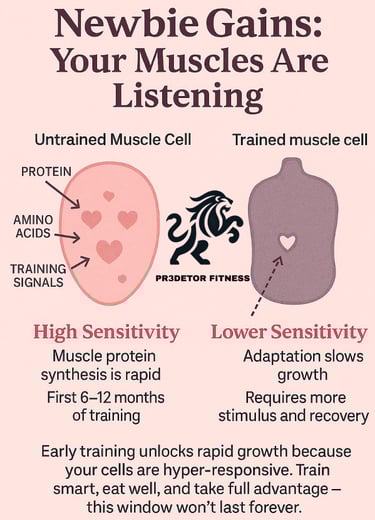
For novice lifters, the body is particularly responsive to strength training stimuli. During their initial months of training, beginners typically experience what is termed "newbie gains," wherein they can gain muscle while losing fat. This is largely due to the heightened sensitivity of muscle cells to both mechanical and metabolic stress, leading to effective hypertrophy alongside a caloric deficit.
Individuals returning to training after a break may also find themselves in a favorable position to experience muscle gain and fat loss simultaneously. Muscle memory plays a crucial role here; previous training results in cellular adaptations that can be reactivated more rapidly than in those who have never trained before. This phenomenon enables returning athletes to reclaim muscle mass more efficiently while shedding excess fat.
Moreover, the mechanisms behind simultaneous fat loss and muscle gain are influenced by dietary choices and hormonal responses. A diet rich in protein can facilitate muscle repair and growth, while also supporting fat oxidation. Additionally, managing caloric intake effectively, perhaps through a slight caloric deficit, can enable the body to utilize stored fat for energy, leading to fat loss.
In practical terms, individuals aiming for such dual outcomes should prioritize compound exercises in their training regimes and ensure a diet that supports recovery and muscle synthesis. It is essential, however, to maintain realistic expectations and understand that these outcomes may be temporary, particularly for individuals who have been previously trained.
Why People Chase Illusion
The pursuit of simultaneous weight loss and muscle gain is often deemed unattainable, yet it remains a prominent goal for many individuals. A multitude of psychological, cultural, and social factors fuel this desire. One significant influence is the pervasive nature of social media, where platforms like Instagram and TikTok showcase idealized physiques through carefully curated images and videos. These portrayals often mislead individuals into believing that achieving a sculpted body is achievable with minimal effort, creating unrealistic expectations.
Furthermore, the fitness industry promotes various trends that suggest instantaneous results are possible, leading many to chase after quick-fix diets and workout regimens. Influencers and personal trainers frequently advocate for programs that emphasize rapid transformation, reinforcing the idea that one can lose fat while simultaneously gaining muscle. This notion, although appealing, oversimplifies the body's complex physiological processes and disregards the need for a structured and strategic approach to fitness.
On a personal level, insecurities can play a crucial role in shaping fitness goals. For many individuals, societal standards of beauty and physicality lead to a relentless pursuit of an idealized image. This pressure to conform can result in misguided efforts toward achieving a body type that is often unrealistic, as well as neglecting one’s overall health in the process. The desire to achieve both weight loss and muscle gain stems from a longing for acceptance and validation, further perpetuated by cultural narratives around fitness and appearance.
The combination of these factors contributes to a widespread pursuit of a dual fitness goal that is fundamentally flawed. Understanding these dynamics helps to recognize the challenges individuals face in navigating the complex landscape of body image and fitness aspirations. Ultimately, individuals seeking to embark on their fitness journeys should focus on informed and healthy practices rather than unattainable ideals.
Choose the Right Goal
Setting fitness goals is a critical step in any health journey, yet many individuals struggle to define their objectives clearly. To be successful, it is essential to establish realistic goals based on personal circumstances, preferences, and desired outcomes. Understanding whether to prioritize weight loss, muscle gain, or a balanced fitness level is crucial for achieving effective results. Each individual’s body composition, metabolic rate, and fitness level can vary significantly, necessitating a personalized approach to goal setting.
Before embarking on any weight loss or muscle gain regimen, conducting a self-assessment is recommended. Evaluating one’s current fitness level, dietary habits, and lifestyle factors will provide insight into where improvements can be made. For instance, individuals with a higher body fat percentage may benefit from focusing initially on weight loss, while those with a lower percentage might find muscle gain to be a more suitable priority.
Additionally, understanding personal preferences in terms of dietary choices and exercise routines can aid in setting achievable goals. It is essential to select a path that aligns with long-term interests and commitments. For instance, if someone enjoys resistance training, focusing on muscle gain may lead to greater adherence than pursuing a restrictive diet aimed solely at weight loss.
The importance of striking a balance cannot be overlooked during this process. While some may wish to lose fat, incorporating strength training can lead to a healthier body composition, ultimately leading to a more sustainable lifestyle. By establishing clear, realistic goals and understanding one’s preferences, individuals can set themselves up for success in their fitness journeys.
Coaches Notes- We are as human emotionally louder than biology.. what coach what does that mean I'm a man reading this. Yeah Yeah... we get it relax bruiser it fits you to ever heard how you wear your heart on your sleeve. Ok with me... Ok lets finish this... We crave a narrative we want to be right, doing the right thing all at once.
How do we fix it....? Pr3detor Style.... Say it with me..... ready.....
"I'm in a Building Season- I'm adding armor."
"I'm in a Cutting Season- I'm sharpening the frame."
"I'm in Recomp Season- I'm refining the structure."
We have reframed the goal from outcome obsession to identity alignment. I gave my body a clear mission, and protects me from chasing illusion!!
Practical Recommendations
Embarking on a fitness journey often prompts questions regarding whether to prioritize weight loss or muscle gain. Each goal requires a tailored approach for optimal results. To maximize effectiveness, it is crucial to adopt strategies that focus on one objective at a time, rather than attempting to achieve both simultaneously.
When aiming for weight loss, creating a caloric deficit should be your primary focus. This entails consuming fewer calories than the body burns. It is advisable to integrate whole foods such as vegetables, lean proteins, whole grains, and healthy fats into your diet. Additionally, regular meal planning can prevent impulsive food choices that might derail your progress. Engaging in cardiovascular exercises like running, swimming, or cycling can also significantly aid in fat loss while improving overall cardiovascular health.
Conversely, if your objective is muscle gain, prioritizing strength training is essential. Resistance exercises such as lifting weights or using body weight can stimulate muscle hypertrophy. It is also important to meet caloric needs, ensuring an adequate surplus to fuel muscle growth. Aim to increase protein intake, as it plays a vital role in muscle repair and growth. A balanced diet complemented by consistent strength training can lead to significant gains over time.
Monitoring progress is key to staying motivated and adjusting your regimen as necessary. Keeping track of metrics such as body measurements, strength benchmarks, or even performance improvements can provide insight into how effectively you are moving towards your goal. This can also help mitigate the frustration of slow progress, ensuring that your endeavors remain mentally satisfying.
Ultimately, choosing to focus diligently on either weight loss or muscle gain fosters a more efficient fitness journey, avoiding the illusion of achieving both simultaneously.
Conclusion
In examining the relationship between weight loss and muscle gain, it is evident that the two goals present distinct challenges when pursued simultaneously. While many individuals are drawn to the potential of achieving both outcomes at once, the realities of human physiology complicate this objective. Weight loss typically involves creating a calorie deficit which can interfere with the body’s ability to build muscle, a process that generally requires a calorie surplus. This fundamental dichotomy suggests that aiming to optimize for both muscle gain and weight loss concurrently may lead to suboptimal results.
Furthermore, focusing on one goal at a time often enhances the likelihood of achieving long-term success. By dedicating a training phase specifically to weight loss, an individual can create the necessary conditions for fat reduction without diverting energy and resources toward muscle building. Conversely, a dedicated muscle gain phase allows for the consumption of adequate nutrients that may not be compatible with a weight loss goal. This strategic approach is beneficial, as it permits individuals to tailor their nutrition and workout routines to meet specific objectives, which could lead to greater satisfaction and efficiency.
In summary, while the pursuit of both weight loss and muscle gain holds appeal, it is essential to recognize the complexity of these goals. A comprehensive understanding of how the body responds to different stimuli can significantly impact the outcomes of one's fitness journey. Individuals are advised to prioritize their objectives, understanding that a focused approach yields more effective and sustainable results. Gradually, as one becomes adept at managing either weight loss or muscle gain, they may find greater overall improvement in their fitness journey, leading to a more harmonious balance in the long run.
PR3DETOR
Tribe-Driven. Archetype-Based. Challenge-Built.
Privacy Policy
(C) 2026 Pr3detor. All rights reserved.
Support: Support@pr3detor.com Built for the Tribe.
LEGAL
About Us