
Unleashing the Savage Archetype: Embrace Your Inner Warrior
"Savage"
Coach Gabe
2/18/20269 min read
The Savage is Not Reckless but Relentless
The savage archetype embodies strength, determination, and a focused mindset, which sets it apart from the notion of recklessness. Being reckless often connotes a lack of regard for consequences, driven by impulsive behavior. In contrast, the relentless nature of a savage signifies a calculated approach, where every action is aligned with a goal. This distinction is crucial in understanding how these individuals harness their inner strengths.
At the core of the savage archetype lies an unwavering commitment to their passions and objectives. A savage approaches challenges with a resolute spirit, facing adversity head-on. This mindset is akin to that of goal-oriented individuals who prioritize their ambitions while remaining steadfast in their pursuit. Relentlessness translates into persistence, as these individuals navigate obstacles with a clear focus rather than a scattergun approach.
The true essence of a savage can be observed in their ability to channel their energy into productive efforts. Rather than succumbing to distractions or the allure of immediate gratification, they demonstrate a disciplined commitment to long-term goals. This pursuit of excellence highlights a fundamental truth: the savage knows that greatness is often born from hard work, sacrifice, and resilience.
Moreover, the mindset of the savage is characterized by ongoing self-improvement. They continually seek to refine their skills and increase their knowledge, making them adaptable in the face of ever-changing circumstances. Each setback serves as a lesson, fueling their tenacity rather than stifling it. Thus, one can see that the savage archetype is not merely defined by brute force; it is equally about mental fortitude and strategic thinking.
In essence, embracing the savage within requires recognizing the difference between recklessness and relentlessness. By cultivating a fierce focus on their aspirations and a determination that persists through adversity, individuals can embody the true strength of the savage archetype.
Coach Notes - My observation over 26 years of doing some form of fitness. The Savage isn't the loudest lifter in the room. He or she walks in with a quiet, unmistakable voltage- like something dangerous just woke up inside him or her. The Savage doesn't chase hype; they summon it. In my honest opinion no pre-workout theatrics, a crowd, or word of encouragement necessary. Why? Their fuel is old, deeper, and far more reliable: the instinct to conquer what once conquered them.
The Biology of the Savage
The savage archetype is not solely a product of personality but also deeply intertwined with biological factors. The physiological responses that characterize this archetype can be largely attributed to the influence of adrenaline, hormones, and innate instincts. When faced with challenges or threats, the human body initiates the fight-or-flight response, triggering the release of adrenaline. This surge enhances both physical and mental capabilities, sharpening focus, increasing strength, and fostering a heightened state of awareness. Such biological reactions are crucial for individuals who embody the savage archetype, as they enable quick decision-making and prompt action in high-stakes situations.
Additionally, hormones such as cortisol and testosterone play pivotal roles in shaping behaviors associated with the savage. While cortisol is involved in stress responses, allowing individuals to cope with demanding environments, testosterone has been linked to aggression and competitiveness. The balance of these hormones can significantly influence one's capacity to confront challenges and assert dominance, further emphasizing the connection between biology and the savage persona.
Genetics also contribute to the manifestation of the savage archetype. Certain heritable traits may predispose individuals to be more resilient or aggressive, traits that are often celebrated in savagery. Furthermore, the impact of environmental factors, such as upbringing and life experiences, cannot be overstated. Individuals exposed to adversity may develop mental toughness and adaptability, enriching their capacity to tap into their inner warrior.
In summary, the biology of the savage archetype is a complex interplay of physiological responses, hormonal influences, genetic predispositions, and environmental factors. These elements collectively shape the savage's physical attributes and mental fortitude, which empower them to confront the challenges of life with unwavering determination.
The Savage Ritual
The embodiment of the savage archetype is often represented through robust rituals and practices that hone both physical prowess and mental acuity. These rituals serve as gateways for individuals to awaken their inner warrior and cultivate the tenacity that characterizes the archetype. Physical training forms the cornerstone of these practices, whereby participants engage in diverse forms of exercise designed to build strength, endurance, and agility. Weightlifting, martial arts, and high-intensity interval training are but a few examples of the activities that enhance physical capabilities.
Moreover, the significance of mental fortitude cannot be overstated within the realm of the savage archetype. Meditation and mindfulness practices are integral components of the rituals, designed to sharpen the focus and enhance emotional stability. Through meditation, individuals develop a keen sense of awareness, fostering a powerful connection between the mind and body. This connection is crucial for those striving to embody the savage archetype, allowing them to face challenges with resilience and courage.
Coach Insight - In powerlifting, the Savage shows up in the moments most athletes avoid- the final warm-up that feels heavier than it should, the second attempt that rattles confidence cause it moves slow in the mind but reality is different, the bar that refuses to move until you decide you're done negotiating with your comfort. The Savage is the version of you that stops asking the weight for permission. Flashback damn it Gabe just F&%k Bench. Thank you Mr. Rick for that still have the shirt somehwere lol.
In addition to physical training and meditation, individuals often partake in rituals that honor ancestral practices, which can involve participation in communal gatherings or solo ventures into nature. These experiences serve to ground individuals, immersing them in the primal energy of the earth while allowing for personal reflection. Engaging in nature fosters a sense of belonging to a larger cycle of life, further emboldening the spirit of the warrior.
Ultimately, the collection of these rituals—intense physical training, mindfulness practices, and deep-rooted ancestral connections—plays a crucial role in cultivating the characteristics of the savage archetype. By embracing and committing to these practices, individuals can not only channel their inner strength but also foster a resilient mindset that empowers them to navigate life's challenges with unwavering resolve.
When the Savage Appears in Training
The Savage Archetype often surfaces in training environments where individuals are challenged to transcend their perceived limitations. This phenomenon is particularly evident in sports, martial arts, and other physically demanding pursuits. The training process is inherently rigorous; participants frequently encounter obstacles that test not only their physical prowess but also their mental resilience. It is during these moments of adversity that the savage archetype reveals itself, igniting a primal drive to overcome challenges.
In the context of sports, athletes may find themselves in critical situations where their endurance is tested. It could be during the final minutes of a high-stakes game or while pushing through the pain barrier in a marathon. The last stage walkout before a new PR attempt. Here, individuals tap into their inner warrior, invoking the savage spirit to dig deeper, rely on instinct, and summon the courage required to persevere. Each repetition in training becomes an opportunity to harness this fierce determination, allowing athletes to redefine their limits.
Martial arts training serves as another significant arena for the savage archetype. Practitioners often encounter sparring sessions that push them to confront fear, pain, and uncertainty. The moments when one feels overwhelmed or on the brink of defeat often catalyze the emergence of the savage self. As practitioners engage in combat, they frequently recognize that tapping into their raw instincts can lead to newfound levels of performance. This realization reinforces the idea that the savage archetype is not a mere persona but an essential aspect of cultivating strength, both physically and mentally.
Overall, recognizing the emergence of the savage archetype during training is crucial. It reflects the innate ability of individuals to endure and triumph over hardship, proving that within their depths lies a formidable warrior ready to conquer challenges. Whether in sports or martial arts, embracing this savage nature can be transformative, leading to enhanced performance and personal growth.
The Dark Side of the Savage and How to Control It
The savage archetype often embodies powerful qualities such as strength, assertiveness, and courage. However, these formidable traits may also give rise to negative emotions, including aggression and a diminished sense of empathy. Without appropriate management, this archetypical energy can manifest in detrimental ways that affect interpersonal relationships and personal well-being.
Coach Insight -The Savage Archetype is often misunderstood by outsiders. People see the intensity, the locked-in stare, the refusal to quit, and they mistake it for anger or aggression. But the Savage isn't mean-he/she is focused. He/she not hostile but harnessed. What looks like rage is actually deep, disciplined commitment to pushing past the limits.
One of the key challenges of embracing the savage archetype is to recognize and tame its darker aspects. Aggression, in particular, can lead to conflicts and hinder one’s ability to coexist harmoniously with others. To mitigate this, self-awareness is essential. Engaging in mindfulness practices, such as meditation or reflective journaling, can help individuals identify their triggers and impulses. This heightened awareness allows for better emotional regulation, enabling one to respond rather than react adversely in heated situations.
Moreover, channeling the raw energy of the savage can be beneficial when directed toward constructive outlets. Physical activities such as martial arts, sports, or even vigorous workouts can provide a productive means to siphon off pent-up aggression. These activities not only foster physical well-being but also facilitate emotional balance and mental clarity.
Finding equilibrium between the savage's inherent strengths and the need for compassion is crucial. Cultivating empathy towards others can soften the harsher elements of the savage archetype. Engaging in community service or volunteering can help build emotional connections, fostering a sense of shared humanity. Seeking guidance from mentors or therapists can further support individuals in navigating these complexities and enhancing emotional intelligence.
In essence, while the savage archetype holds significant power, recognizing and controlling its darker facets is vital. By adopting strategies that promote self-awareness, constructive movement, and empathy, individuals can harness the savage energy to lead a balanced and fulfilling life.
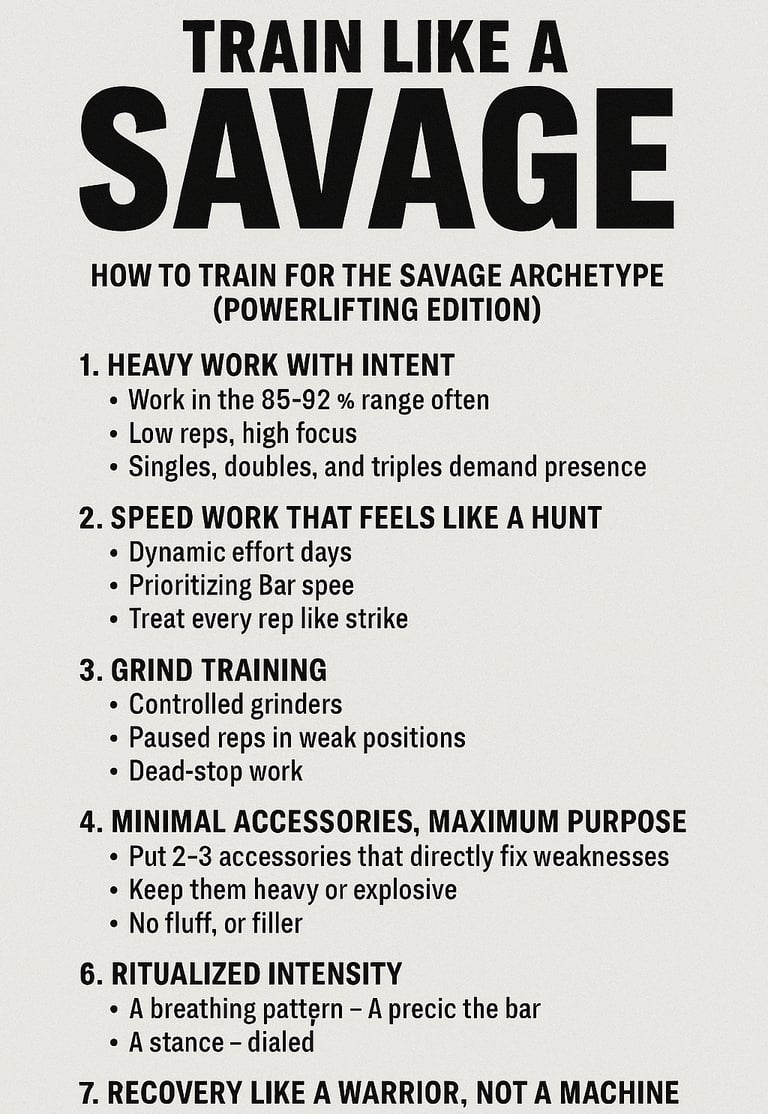
How to Train Like a Savage
To truly embrace the savage archetype, one must adopt a training regimen that fosters both physical prowess and mental resilience. The savage spirit is underpinned by a relentless drive for excellence, and this can be cultivated through a structured yet flexible approach to training. This involves not just rigorous workout routines, but also the cultivation of a mindset oriented towards growth and overcoming challenges.
Firstly, a comprehensive physical workout plan is essential. This should incorporate strength training, cardiovascular conditioning, and flexibility exercises to ensure a well-rounded fitness level. Incorporate compound movements like deadlifts, squats, and bench presses into your routine; these exercises engage multiple muscle groups and are great for building overall strength. Running or high-intensity interval training (HIIT) can elevate your cardiovascular health and enhance stamina. For flexibility, practices like yoga or dynamic stretching should be included to promote recovery and reduce injury risk. Aim for three to five days of structured workouts tailored to your fitness level.
Mental preparation is equally crucial. Paying attention to your mental state before training can enhance performance significantly. Techniques such as visualization and positive affirmations can reinforce your determination to push through discomfort. Picture yourself achieving your goals and recite empowering statements that awaken the warrior within. Mental grit can be built through practicing mindfulness and sustaining focus during workouts, pushing beyond mental barriers that hinder progress.
Additionally, developing a savage-like mindset requires embracing challenges as opportunities for growth. This involves setting ambitious yet achievable goals and maintaining an unwavering commitment to them. Keeping a training journal can be useful, allowing you to track progress and reflect on setbacks, transforming them into lessons learned rather than failures. By integrating these approaches, individuals can cultivate a lifestyle that embodies the savage spirit, relentlessly pursuing their potential.
Coaches Tip- You don't earn strength in the gym- you cash it in. Recovery (#7) is where Savage reloads. Prioritize sleep like a training block. Eat like your rebuilding armor on a tank. Stretch as to sharpen steel. The Bar doesn't care how hard you trained- it cares how well you recovered. Stay ruthless about rest. That how a Savage remains dangerous!
The Savage in Real Life
The savage archetype is not merely a conceptual idea; it is reflected in the lives and achievements of numerous individuals who have traversed challenges and emerged victorious. A prime example of this is Serena Williams, a professional tennis player renowned for her extraordinary prowess and unwavering determination. She embodies the savage spirit through her relentless pursuit of excellence and resilience in overcoming obstacles, including injuries and media scrutiny. Williams' journey to the top has not only redefined women’s tennis but also empowered countless individuals who admire her unyielding strength.
Another prominent figure is Nelson Mandela, whose life epitomizes the savage archetype in the context of leadership and social justice. Spending 27 years in prison, Mandela’s commitment to fighting apartheid and advocating for equality demonstrated immense fortitude and integrity. His ability to forgive and unite a divided nation showcases how the savage archetype can drive societal transformation, inspiring future generations to tackle systemic injustices with bravery.
In the realm of athletics, figures such as Kobe Bryant also exemplify the savage warrior within. Known for his relentless pursuit of greatness and work ethic, Bryant’s ‘Mamba Mentality’ reflects the traits of the savage archetype. This mentality, characterized by perseverance and focus, allowed him to excel despite challenges on and off the court, making a profound impact on both his sport and his followers.
Furthermore, activists like Malala Yousafzai represent the savage spirit in their fight for education and women’s rights. Surviving an assassination attempt, her courage and dedication to promoting knowledge in developing regions showcase how the savage archetype can lead to significant societal change. Each of these individuals illustrates the dynamic nature of the archetype and the lasting influences they have had in their respective fields, encouraging others to harness their inherent savagery to confront adversity head-on.
My favorite- Hunter Henderson to be truthful I have never really enjoyed sumo-deadlifts but if you want to see a athlete embody the Savage archetype look her up.. Type her name do what you know to do. Now lets bring this to a finality. I am not speaking of her record breaking lifts. I am speaking on these traits. Do you share the same?
mindset+precision
unapologetic (she pee's on herself ) wow.
intensity
no applause just bar confrontation
calm but aggressive output
controlled voltage
primal
"Champions are crowned. Savages are forged. One is given a title- the other becomes a threat."
----Coach Gabe----
PR3DETOR
Tribe-Driven. Archetype-Based. Challenge-Built.
Privacy Policy
(C) 2026 Pr3detor. All rights reserved.
Support: Support@pr3detor.com Built for the Tribe.
LEGAL
About Us