
Deadlift 101: How to Get Your Knees Out of the Way of the Bar Without Ruining Your Setup
"Knee Away"
Coach Gabe
2/13/20269 min read


Understanding the Deadlift Mechanics
The deadlift is a fundamental exercise integral to strength training, characterized by its emphasis on proper body mechanics and positioning. To perform a deadlift effectively, lifters must prioritize their stance, grip, and overall setup. The initial positioning is crucial, as it establishes the foundation for lifting success. In particular, the angle of the back, the position of the hips, and the alignment of the knees play vital roles in the execution of the lift.
As the lift begins, the interaction between the lifter's knees, shins, and the barbell becomes critical to the overall effectiveness of the deadlift. Ideally, as the barbell is pulled off the ground, the knees should move out of the way of the bar, allowing for a smooth upward trajectory. This necessity dictates the engagement of various muscle groups, including the hamstrings, glutes, and quadriceps, all of which contribute to generating the force required for the lift. Moreover, maintaining an upright torso is essential to prevent undue strain on the lower back, thereby facilitating a safer lifting experience.
*Coaches insight- force production you hear me saying it all the time. Force production = ability to create high level of muscular tension to move heavy weight. This is the foundation to max strength my lovely people.
Force = Mass x Accelaration
So in lifting:
Mass= the weight of the bar
Acceleration = how fast you can move it
Even slow reps still require massive force production when loads are heavy
The movement pattern of the deadlift requires attention to detail to ensure that the lifter not only lifts the weight efficiently but also minimizes the risk of injury. A proper setup involves a combination of a firm grip on the bar, a stable foot position, and the alignment of the knees relative to the bar. It is recommended that lifters practice engaging their core throughout the lift to maintain stability and control, which aids in keeping the barbell close to the body.
Understanding these mechanics is integral for anyone looking to improve their deadlift technique. Recognizing how the knees, shins, and bar interact with the barbell can lead to improved strength and performance, ultimately making the deadlift a more effective exercise in a lifter's routine.
The Importance of Good Form
Maintaining proper form during the deadlift is crucial for several reasons, particularly when it comes to aligning the knees with the path of the barbell. Suboptimal form can not only lead to diminished lifting efficiency but can also increase the risk of injury. One of the most critical aspects of deadlift form is ensuring the knees stay clear of the barbell's trajectory. When lifters allow their knees to extend forward excessively, it creates a collision point with the bar, which can lead to imbalances and potential strains.
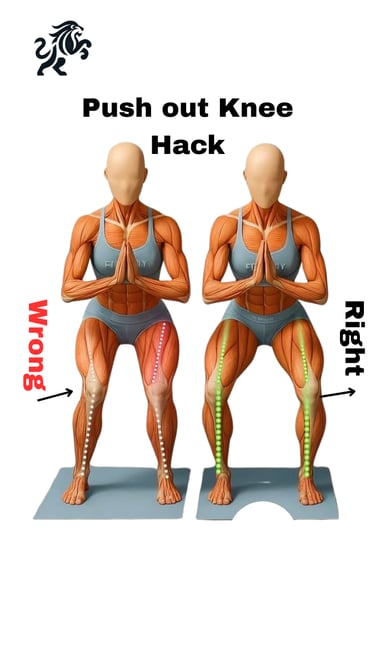
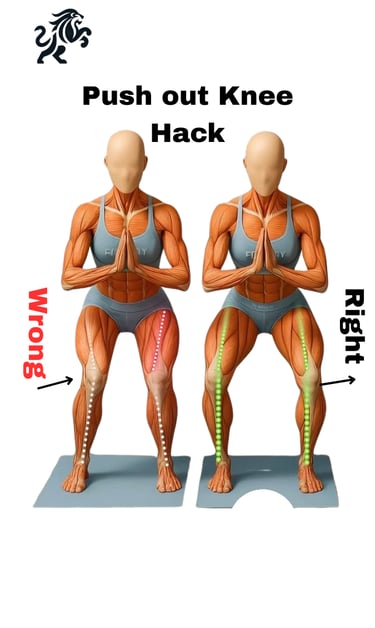
Common mistakes associated with deadlift form include allowing the knees to cave inwards or failing to push them outward as the lift progresses. This lack of awareness can result in improper alignment, which decreases the lifter's leverage and places unnecessary strain on the lower back and knees. By focusing on good form, lifters can facilitate a smoother path for the bar while ensuring that their body mechanics are optimal. Maintaining a straight bar path, while keeping the knees effectively positioned, helps engage the appropriate muscle groups more effectively during the lift.
Furthermore, achieving a solid deadlift setup is about more than just performance; it's also essential for long-term health and fitness. A strong foundation with proper form ensures that lifters can progressively increase weight safely without developing bad habits that could lead to injury. Lifters should practice regular form checks and consider employing video analysis or feedback from experienced coaches to ensure they are not only aware of their body position but also are capable of making necessary adjustments. Ultimately, prioritizing good form will not only enhance performance but also contribute to overall lifting longevity.
Key Preparation Steps for Deadlifting
Preparing for a successful deadlift requires attention to several key factors including foot placement, grip, and hip positioning. To start, it's essential to position your feet correctly; they should be shoulder-width apart with your toes pointed slightly outward, which will provide optimal stability and power during the lift. This alignment allows for better engagement of the lower body muscles involved in the deadlift. Team I do understand that sumo deadlifts and a plethora of others exist this is a knee out of the way educational bit.
The grip is another critical element. A common approach is to use a mixed grip—one hand facing forward and the other facing towards you—this helps to maintain control of the bar during the lift. Alternatively, you may opt for a double overhand grip to enhance grip strength, though it may require you to reduce the weight initially until you become comfortable. Whatever grip you choose, ensure your hands are positioned just outside of your knees to prevent any interference with their movement.
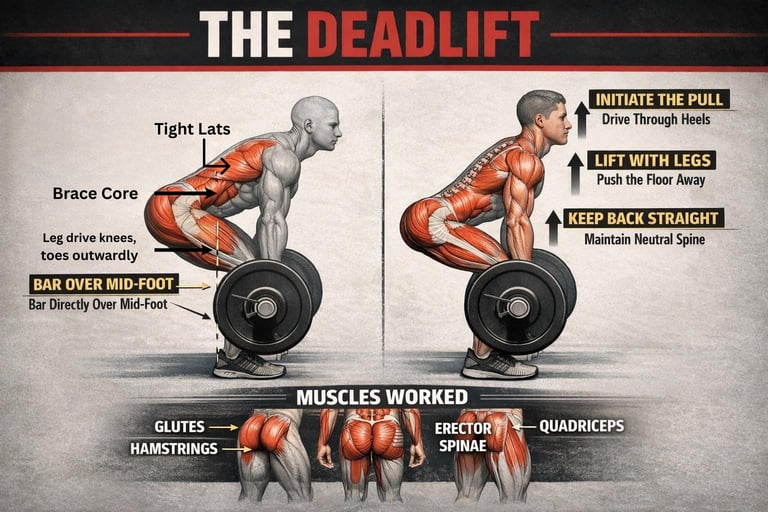
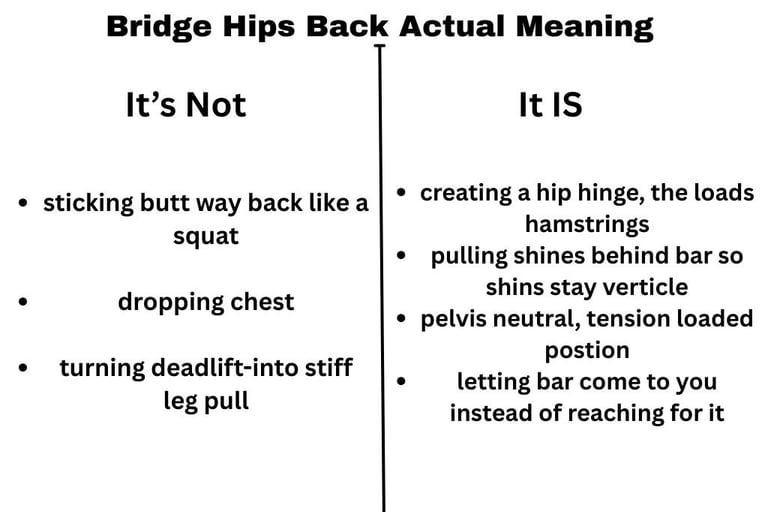
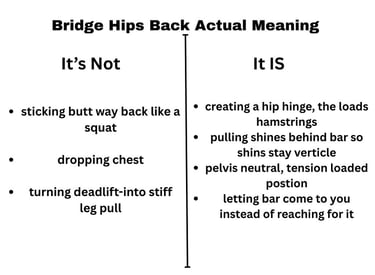
Next, focus on your hip positioning. Before lifting, bridge your hips back while keeping your back straight, which will align your body in a position where the bar's path remains straight. This hip hinge is pivotal in allowing the knees to stay clear of the barbell, reducing the risk of injury and maximizing the effectiveness of the lift. As you approach the bar, it should be positioned over the mid-foot rather than over the toes or heels, which guarantees more power as you initiate your lift.
Finally, perform a visual inspection of the bar’s path as well as your knees before starting the lift. This thorough inspection ensures you are acutely aware of where the bar will travel and how your knees will move in conjunction. Visualizing the lift and making sure that all components of your setup are harmoniously aligned serves as a foundation for a successful deadlift.
Engaging Core and Hip Muscles
The deadlift is a compound exercise that enlists multiple muscle groups for optimal performance. Among these, the core and hip muscles play a vital role in stabilizing the body throughout the movement. Engaging these muscles effectively contributes to maintaining the correct posture, which is essential for lifting the barbell while ensuring that the knees do not impede the path of the bar.
Prior to initiating the lift, it is crucial to activate the core muscles, including the rectus abdominis, obliques, and the deep stabilizing muscles, such as the transversus abdominis. Contracting these muscles provides a stable foundation, allowing for greater control over the spine and pelvis. A strong core helps to maintain neutral spine alignment, which is imperative in preventing lower back injuries and facilitating a powerful lift.
In addition to core activation, focusing on the hip muscles is equally important. The gluteus maximus, hip adductors, and hip flexors are essential for translating power from the lower body to the lifting motion. By engaging these muscles, the lifter not only enhances proper mechanics but also improves force production. When the hips are adequately activated, they assist in driving forward while keeping the barbell close to the body, thereby minimizing the risk of the knees interfering with the lift.
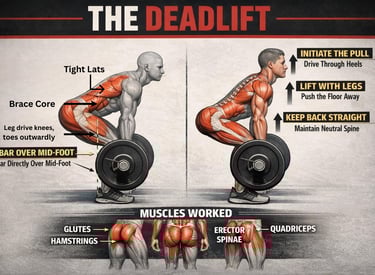
Furthermore, as you grasp the bar and prepare for the pull, ensure that you are setting your hips at the appropriate height. This positioning enables efficient engagement of both the core and hip muscles, leading to a more coordinated and effective lift. Through mindful focus on these muscle engagements, a lifter can optimize their deadlift technique, ensuring that the knees remain aligned and do not obstruct the bar's trajectory. Below is a simple yet effective picture showcasing a few but not all the important factors that constitute a proper deadlift.
Techniques to Keep Knees Out of the Way
Effectively managing the position of the knees during the deadlift is essential for optimal lift mechanics and injury prevention. One of the primary techniques to ensure that the knees remain out of the bar's path involves mastering the hip hinge movement. This foundational movement teaches lifters to initiate the deadlift by bending at the hips rather than the knees, thus allowing the bar to travel in a straight line.
To practice the hip hinge, lifters can utilize various drills, such as the Romanian deadlift (RDL) and kettlebell swings. In the RDL, the movement begins with the barbell placed at mid-shin level. Lifters should maintain a slight bend in the knees while pushing the hips back, creating a hinge at the hip joint. This setup allows for greater activation of the posterior chain, including the hamstrings and glutes, and helps reinforce the desired positioning of the knees.
Additionally, performing box squats can also aid in training the knees to stay back. By using a box set at an appropriate height, lifters can focus on pushing their hips back before descending. This encourages proper timing for knee movement, ensuring that knees do not interfere with the bar path when executing the deadlift.
Furthermore, working on flexibility and mobility in the hips can significantly contribute to maintaining proper form. Incorporating dynamic stretches like leg swings and hip circles into the warm-up routine can help achieve greater range of motion, which in turn supports a better hip hinge and knee positioning during the lift.
By integrating these techniques into training regimens, lifters can enhance their ability to engage the hips effectively, promoting a successful deadlift while safeguarding against potential injuries.
Common Mistakes and How to Avoid Them
When performing the deadlift, lifters often encounter issues related to knee and bar alignment. Two prevalent mistakes include allowing the knees to drift forward and collapsing during the lift. Both errors not only compromise form but also elevate the risk of injury and limit overall performance.
One common mistake is the tendency for the knees to move beyond the toes as the bar descends. This forward knee movement can create excessive tension on the knee joints, leading to potential injuries. To mitigate this, lifters should ensure they initiate the deadlift with a proper setup. Focus on pushing the hips back while keeping the chest lifted. This technique shifts the emphasis from the knees to the hips and aligns the knees better with the bar path.
Another common issue is the collapse of the knees during the lift, particularly as the barbell approaches the knee level. This can lead to a loss of tension in the posterior chain, severely affecting lifting performance. To prevent this, it is vital that lifters maintain a strong engagement of the core and glutes throughout the movement. One effective strategy is the use of a "wedge" technique, where the lifter actively thinks about pushing their feet into the floor as they lift, helping to maintain stability and alignment during the entire range of motion.
Additionally, regular video analysis can be a beneficial tool for lifters. Recording lifts allows them to identify improper knee positioning and make necessary adjustments. Engaging a coach can also provide insights into optimizing form and technique, offering personalized cues that cater to each individual’s lifting style.
Wrapping Up: Building Your Deadlift Efficiency
As we draw our discussion on enhancing deadlift efficiency to a close, it is essential to reflect on the significant impacts of knee positioning and proper setup strategies. Proper knee alignment is crucial for maximizing strength output while minimizing the risk of injury. As you approach the bar, ensuring that your knees are positioned correctly – ideally not obstructing the path of the bar as you lift – will greatly improve your overall performance.
Moreover, the setup is paramount. Your foot positioning, grip width, and hip hinge all play vital roles in achieving a successful deadlift. Focus on establishing a stable base by ensuring your feet are hip-width apart and your shoulders are over the bar. This setup allows for a smooth lift, enabling the bar to travel in a straight line, which is essential for both efficiency and safety.
It is recommended that lifters continually practice their technique, as consistency is key to mastering the deadlift. Incorporating drills such as paused deadlifts or halting at the knee can help reinforce the correct positioning that encourages better lifting mechanics. Additionally, consider tracking your progress through video analysis or workout logs. This can provide valuable feedback regarding your form and highlight areas for improvement.
In conclusion, consistently implementing these strategies will not only enhance your deadlift efficiency but also contribute to your overall strength development. By prioritizing knee positioning and setup, you can cultivate a more effective deadlifting technique that will pay dividends in your fitness journey.
*Coaches Notes- ladies and gentlemen below is a brief yet I believe pretty simple effective way to teach yourself how to get your knees out of the way. Pay attention to the bar bath it is just at mid shin, his shins are vertical to the earth, his spine is neutral, his grip is solid, he is braced well and, has immaculate tension pull, also this young man focuses on perfecting his technique while understanding that strength and power are byproducts of his technique.
PR3DETOR
Tribe-Driven. Archetype-Based. Challenge-Built.
Privacy Policy
(C) 2026 Pr3detor. All rights reserved.
Support: Support@pr3detor.com Built for the Tribe.
LEGAL
About Us