
Understanding Glute Growth: Strengthening vs Size
"Can I Grow My Glutes"?
Coach Gabe
12/25/202512 min read


How to Grow the Glutes Through Compound Lifts
Achieving optimal glute growth can be significantly enhanced through the strategic use of compound lifts. Compound lifts such as squats, deadlifts, and lunges engage multiple muscle groups and are particularly effective for targeting the glute muscles. These exercises allow for the application of greater loads, which is fundamental for stimulating hypertrophy in the gluteal region.
Squats are perhaps one of the most prominent exercises for glute development. During a squat, the gluteus maximus is activated as one descends, and it works to drive the body back up to a standing position. This exercise not only increases strength but also enhances muscle size when performed with progressive overload—a method that involves gradually increasing the weight lifted over time. Variations such as barbell squats, sumo squats, and front squats can be incorporated to further diversify the stimulus on the glutes.
Deadlifts are another key compound movement beneficial for glute growth. Similar to squats, they predominantly target the posterior chain, which includes the glutes. The conventional and sumo deadlift variations present distinct stances that can emphasize different parts of the glute muscles. Employing proper form is critical, as it ensures maximum activation of the glutes while minimizing the risk of injury.
Lunges, including walking and Bulgarian Split Squats, serve as excellent unilateral exercises that target each glute individually. This focus helps in addressing any strength imbalances and provides a full range of motion that can contribute to muscle size. Incorporating these compound lifts into a well-structured training regimen is essential for anyone serious about glute development. Performing 3 to 4 sets of each exercise with adequate repetitions and weights will promote muscle engagement, allowing for noticeable changes over time.
How Supportive Muscles Help the Glute Grow
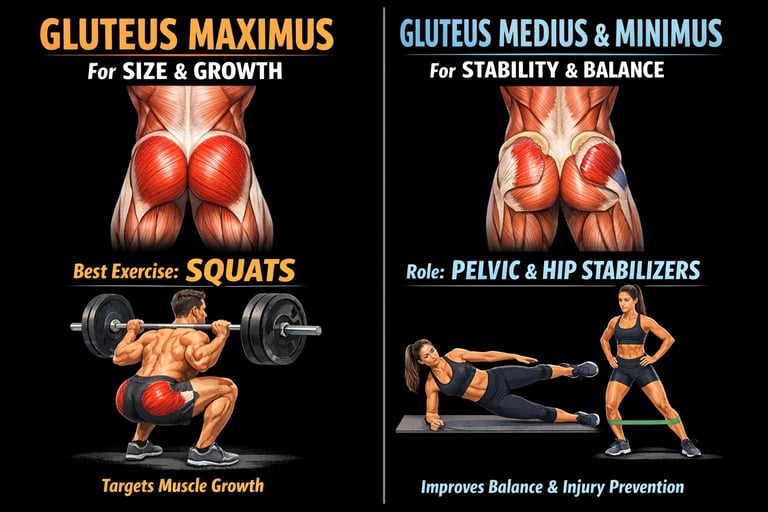
The growth and development of the gluteal muscles, particularly the gluteus maximus, cannot be fully understood without considering the vital role played by supportive muscles such as the gluteus medius and minimus. These smaller muscles may often be overlooked, yet they are essential for proper gluteal function and overall strength. The gluteus medius, located on the outer surface of the pelvis, is primarily responsible for hip stabilization during movement, while the gluteus minimus assists with hip abduction and medial rotation.
Incorporating exercises that target these supportive muscles is crucial for promoting effective glute growth. The glute medius and minimus work synergistically with the gluteus maximus, contributing to force generation during compound movements like squats and lunges. When these stabilizer muscles are strong, they prevent compensatory movement patterns that can hinder the development of the larger glute muscles. For instance, during a squat, the glute medius supports the pelvis, ensuring proper alignment and stability, which allows the gluteus maximus to engage more effectively.
Moreover, neglecting the glute medius and minimus can lead to imbalances and potential injuries, as strong supportive muscles play a critical role in maintaining proper movement mechanics. As a result, those seeking to maximize their glute growth should incorporate specific exercises that target the medius and minimus, such as clamshells, lateral band walks, and single-leg deadlifts. By ensuring these supportive muscles are developed in conjunction with the gluteus maximus, individuals not only enhance their glute growth but also improve their functional strength and overall athletic performance.
*Coaches Notes: The glute minimus and glute medius are often misunderstood in their role within the gluteal muscle group, particularly when it comes to physical appearance versus functional strength. Unlike the gluteus maximus, which is the largest muscle responsible for the bulk and size of the buttocks, the minimus and medius are smaller muscles primarily engaged in stabilizing the pelvis, facilitating hip abduction, and assisting in movements like side leg raises and squats. While these muscles contribute to improving overall strength and stability of the gluteal region, they do not significantly contribute to muscle hypertrophy, or size increase. Instead, their strength-enhancing qualities are vital for athletic performance and injury prevention, allowing for better control and efficiency in movements. Therefore, while training these muscles can lead to a firmer, more toned appearance, their primary function lies in enhancing functional strength rather than adding noticeable bulk to the glutes.
*Guys if you only read this over and over again to understand do not fall victim to lies of the internet and influencers please.....
Optimal Training Frequency for Glute Workouts
When engaging in glute training, determining the optimal frequency of workouts is crucial for effective muscle growth. Research suggests that for most individuals, training the glutes two to three times per week can yield significant results in both strength and size. This frequency allows for adequate volume, which is essential for muscle hypertrophy, while also ensuring sufficient recovery time to prevent overtraining.
The volume of training, consisting of sets and repetitions, should complement the frequency of training sessions. A combination of heavier weights with lower repetitions on some days, alongside lighter loads with higher repetitions on others, can stimulate different muscle fibers and maximize growth potential. For instance, performing strength-focused workouts on one day and hypertrophy workouts on another can balance the benefits of increased weightlifting intensity with the endurance of higher repetitions.
Personal recovery rates also play a significant role in determining training frequency. Factors such as sleep quality, nutrition, and overall lifestyle can affect how quickly the body recovers from intense workouts. Some individuals may thrive on more frequent glute training, while others may require more time between sessions. Therefore, listening to one’s body and adjusting training frequency accordingly is essential for optimal results.
*Key Word: See the Word Recovery make sure you understand this!
Moreover, one technique to enhance glute training frequency is the incorporation of different training methodologies. Techniques such as progressive overload, circuit training, or supersets can allow for a comprehensive workout without overexertion. By diversifying the training approach, individuals can effectively stimulate glute muscles while keeping the routine enjoyable and avoiding plateaus.
Many individuals striving for enhanced glute development often encounter stagnation in their progress. Understanding the reasons behind this plateau is essential for effective glute growth. Several factors can contribute to insufficient growth, including inadequate training volume, improper exercise form, poor nutrition, and genetic predisposition.
The first reason is insufficient training volume. For muscles to grow, they require an adequate stimulus. Lifting too light or not performing enough sets can lead to insufficient muscle fatigue, inhibiting the glutes from reaching hypertrophy. It is vital to ensure that the total volume, which includes the number of repetitions and sets, is tailored to promote growth.
Another critical factor is improper exercise form. Performing exercises with poor technique can not only prevent efficient targeting of the glute muscles, but also increase the risk of injury. To maximize glute engagement, individuals must focus on correct posture and movement patterns when executing exercises such as squats and deadlifts. Consulting a trainer or utilizing mirror feedback can assist in correcting form.
Inadequate nutrition also plays a significant role in supporting muscle growth. Specifically, the body requires sufficient amounts of protein, which is crucial for muscle repair and development. Additionally, overall caloric intake must align with fitness goals—being in a caloric surplus fosters better growth outcomes.
*Key Word: Caloric Surplus guys come on lets keep it real if we want size whether for my biceps or for my buttocks I need calories.. What type? Of course quality!
Lastly, genetic predisposition cannot be overlooked. Some individuals may naturally possess a body composition that makes glute growth more challenging due to a higher percentage of slow-twitch muscle fibers or unique body mechanics. While genetics may present hurdles, understanding these limitations is vital for setting realistic goals.
*Key Word: Higher percentage of slow-twitch muscle fibers!
The Hard Truth No One Will Tell You But I Will!
The development of glute size is often influenced by the composition of muscle fibers present in the area, particularly the ratio of slow twitch to fast twitch muscle fibers. A higher percentage of slow twitch muscle fibers, which are primarily designed for endurance activities, limit hypertrophic growth as they are not as conducive to generating the kind of explosive force or muscle mass associated with fast twitch fibers. Fast twitch fibers have a greater potential for growth due to their ability to respond to high-intensity training with significant muscle damage and subsequent repair—a key factor in muscle size increase. Consequently, individuals with a higher ratio of slow twitch fibers may find it more challenging to attain substantial gluteal hypertrophy, as their muscles are more adapted for stamina and less for developing size and power, thereby impacting their ability to achieve prominent glute development despite regular training.
In conclusion, understanding the barriers to glute development is crucial in overcoming stagnation. By addressing these key factors — training volume, exercise form, nutrition, and genetics — individuals can effectively strategize for continued glute growth.
Genetic Disposition for Glute Size
The concept of genetic predisposition plays a crucial role in understanding glute size and overall body composition. Individuals may often notice that some people seemingly have larger glutes regardless of their exercise routines. This phenomenon can largely be attributed to genetic factors that influence muscle distribution, fat storage, and body structure. Genetics determine the proportion of muscle fibers in different areas of the body, including the glutes, which can lead to observable differences in size among individuals.
Furthermore, genetic predispositions can affect the body's ability to gain and retain fat in specific areas. Individuals with a tendency to store fat in the gluteal region may appear to have larger glute sizes, while those who accumulate fat elsewhere might not develop the same aesthetic qualities. It is essential to recognize that the distribution of body fat is significantly influenced by genetics, as well as other factors such as hormonal levels and metabolism.
Moreover, overall body structure plays a pivotal role in the visual perception of glute size. Variations in pelvic width, leg length, and muscle attachment all contribute to the shape and appearance of the glutes. For instance, individuals with a wider pelvis may naturally present with a more pronounced gluteal profile. Despite these genetic predispositions, it is vital to note that personal goals can still be achieved through targeted training and nutritional strategies.
While genetics may set the baseline for glute size, exercises that focus on strengthening and hypertrophy can lead to substantial improvements. Individuals can work towards enhancing their gluteal muscles, regardless of their genetic background. Tailoring workouts to include various forms of resistance training, such as squats and lunges, can facilitate progress towards achieving personal fitness goals.
The Reality of Glute Sizes on Social Media
In the contemporary digital landscape, social media platforms such as TikTok and Facebook serve as significant channels for fitness inspiration and body image perceptions. However, the presentation of glute sizes in these forums often presents a distorted reality, leading to misconceptions about what constitutes an ideal body shape. Various factors contribute to the misleading depictions of glute size, notably the role of lighting, camera angles, and post-processing techniques.
Lighting is one of the most critical elements affecting how glutes are visually represented. Bright lighting can enhance the appearance of muscle definition and curvature, making glute muscles appear fuller and more developed than they might be in natural settings. Moreover, strategic use of shadows can create illusions of depth and size, complicating the viewer’s ability to discern authentic body shapes from enhanced visuals.
Additionally, camera angles significantly influence the way glute sizes are perceived. Angles that are low or directly behind the subject can exaggerate the size and prominence of glutes. Influencers and fitness enthusiasts often employ these angles intentionally to showcase their physique in a flattering light, further blurring the line between reality and perception. This practice may set unrealistic expectations for individuals seeking to achieve similar results in their own fitness journeys.
Another vital aspect to consider is the prevalence of edited images across social media. These adjustments often include alterations to body proportions, skin smoothness, and even the enhancement of muscle tone, contributing to an idealized version of glutes that is seldom attainable for most individuals without significant effort and adherence to fitness regimens.
The continuous exposure to these digitally altered representations can have profound implications on body image, leading individuals to develop dissatisfaction with their own bodies. Moreover, it may skew fitness goals towards aesthetic outcomes rather than health-centric objectives. As we engage with social media, it is imperative to maintain a critical perspective, understanding the potential effects these portrayals can have on personal body image and fitness aspirations.
The Psychological Impact of Glute Size on Women
In contemporary society, the perception of ideal body images often places a significant emphasis on physical attributes, particularly glute size. This societal norm can profoundly affect women's self-esteem and body image, leading to various psychological implications. The pursuit of an idealized glute size has become particularly salient among women, influenced in large part by the images portrayed in social media and popular culture.
The pressure to achieve a certain aesthetic can result in unhealthy comparisons, as women often find themselves evaluating their worth through the lens of others' appearances. Social media platforms, in their quest for engagement, frequently showcase curated images that often depict highly stylized and edited portrayals of body shapes, thereby contributing to unrealistic standards. This constant exposure can cultivate feelings of inadequacy, encouraging women to chase a specific glute size that may not align with their natural bodies.
Furthermore, the psychological ramifications of striving for an idealistic physique can lead to unhealthy behaviors. Women may resort to extreme diet regimens, over-exercise, or adopt harmful practices in the name of achieving larger glutes. Such behaviors not only jeopardize physical health but can also engender feelings of anxiety and depression, especially when results do not meet expectations. The cycle of comparison and striving for unattainable ideals can create a negative feedback loop that exacerbates issues surrounding body image.
This focus on glute size ultimately highlights a broader societal issue where women's value is often measured by their physical appearance rather than their true character and capabilities. To combat these detrimental effects, it is crucial to foster a culture of body positivity and acceptance, advocating for individual differences, and promoting health based on well-being rather than on size or shape.
Importance of Glutes for Athletes
The glute muscles, consisting of the gluteus maximus, gluteus medius, and gluteus minimus, play a pivotal role in athletic performance across various sports. These muscles are essential for generating power, enhancing agility, and preventing injuries, making them a focal point for athletes aiming to improve their overall capabilities. Strong glutes contribute to effective force transfer during dynamic movements, ensuring that athletes can harness their strength efficiently.
For instance, in sports such as sprinting, the function of the glutes becomes particularly vital. They are responsible for hip extension, which is a key movement during running. A well-developed gluteus maximus contributes to powerful strides, promoting speed and efficiency on the track. Similarly, in sports that require explosive motions, like basketball and football, strong glute muscles enable athletes to perform quick directional changes and maintain balance, crucial for optimal performance.
Moreover, the importance of glutes extends to injury prevention. Weak glute muscles can lead to compensatory movements that increase the risk of injuries, especially in the lower back, knees, and hips. By developing glute strength, athletes can stabilize their pelvis, ensure proper alignment, and decrease the likelihood of strains or sprains. For instance, during high-impact sports, having strong glutes can enhance hip and knee stability, allowing for smoother multi-directional movement and reducing stress on joints.
In summary, strong glutes are not merely an aesthetic concern; they are fundamental to athletic performance. From enhancing power and agility to decreasing injury risk, well-developed glute muscles are an indispensable asset for athletes across all sports disciplines. It is clear that a focused approach to glute training can yield significant benefits, leading to improved performance outcomes and overall athletic success.
Proven Methods for Achieving Real Results in Size and Shape
Achieving real results in glute size and shape requires a systematic approach that encompasses multiple aspects of fitness and nutrition. Firstly, it is essential to focus on exercise selection. Incorporating compound movements such as squats, deadlifts, and hip thrusts, which effectively engage the gluteal muscles, should be prioritized. These exercises stimulate the muscle fibers required for growth and should form the foundation of any training regimen.
Next, training frequency plays a critical role. For optimal glute development, individuals should consider training the glutes at least two to three times per week. This frequency allows for sufficient stimulus while also providing enough recovery time between sessions. Additionally, varying the intensity of workouts is crucial; incorporating both heavy lifting days and lighter, higher-repetition days ensures comprehensive muscle engagement.
Nutrition also significantly impacts muscle growth. A balanced diet rich in protein, healthy fats, and carbohydrates supports muscle recovery and development. It is advisable to consume protein-rich foods such as lean meats, fish, eggs, and legumes to promote muscle repair. Adequate caloric intake is also essential, as a slight caloric surplus can facilitate muscle gain. Tracking macronutrients and adjusting them according to progress can be beneficial.
Moreover, recovery methods should not be neglected. Implementing active recovery days, adequate sleep, and hydration all contribute to muscle repair and growth. Techniques such as foam rolling and stretching can improve flexibility and reduce soreness, further enhancing recovery.
Lastly, applying the principle of progressive overload in strength training is vital for continuous glute growth. Gradually increasing weights, repetitions, or overall workout intensity will challenge the muscles, driving adaptations necessary for size and shape improvements. By implementing these proven strategies, individuals can effectively achieve substantial results in their glute training endeavors.
Can I Grow My Glute?
Many individuals interested in fitness often ponder the question, "Can I grow my glute?" The answer is a resounding YES! With the appropriate exercises, nutrition, and consistency, anyone can develop and enhance their glute muscles, regardless of their starting point or genetic predisposition. The gluteus maximus, gluteus medius, and gluteus minimus offer ample opportunity for growth through targeted strength training.
First and foremost, understanding the fundamentals of muscle growth is vital. Hypertrophy or muscle growth occurs when the muscle fibers undergo stress, leading them to adapt by growing larger. This process can be effectively initiated through compound movements like squats, deadlifts, and lunges that engage multiple muscle groups, including the glutes. These exercises not only stimulate muscle growth but also improve overall strength and functionality.
Moreover, nutrition plays a critical role in glute growth. A diet rich in protein is essential, as it provides the building blocks needed for muscle recovery and growth. Incorporating a balanced diet, alongside adequate hydration, will support your workout regimen and optimize recovery. Monitoring your macronutrient intake and adjusting it according to your goals will further streamline this process.
Additionally, consistency is key. Progress in glute growth is gradual, and sticking to a well-structured program will yield the best results over time. It's also essential to ensure that you are progressively overloading your muscles by incrementally increasing weights or varying the types of exercises performed. This not only prevents plateaus but also encourages continuous improvement.
In conclusion, anyone can achieve noticeable improvements in their glute development with the right blend of exercise strategy, nutritional support, and rigorous commitment. Embrace the journey, it takes discipline and time, listen to your body, and celebrate each milestone as you progress towards your glute growth goals. At Pr3detor Fitness we understand one truth Glutes Grown When Strength Grows!
Look at the image provided draw a reference as to where on your body this picture represents and when exercising connect your new knowledge to your area of target and work. Old timers would say "Never put the cart before the Horse!" get it?
PR3DETOR
Tribe-Driven. Archetype-Based. Challenge-Built.
Privacy Policy
(C) 2026 Pr3detor. All rights reserved.
Support: Support@pr3detor.com Built for the Tribe.
LEGAL
About Us