
The Myth of the Quick Workout: Why Fast Doesn't Mean Effective
"10Min-vs-Real "
Coach Gabe
12/15/20258 min read


The Seduction of the 10-Minute Fix
In recent years, social media has become inundated with the allure of quick workout routines, with many platforms celebrating the concept of achieving fitness goals in a mere 10 minutes. This phenomenon taps into a widespread human desire for immediate gratification, where individuals seek substantial results without dedicating significant time or effort. The appeal of these short, intense bursts of exercise is multifaceted, combining convenience with the psychological satisfaction derived from accomplishing a task in a short timeframe.
The promise of a 10-minute workout not only attracts busy individuals but also brings a sense of efficiency. Fitness enthusiasts are often drawn to the idea that a minimal time investment can yield maximum results. This is further compounded by the dopamine hit that comes with completing a quick workout; the brain associates this brief exercise with a sense of achievement, driving the desire to repeat the experience. Such immediate rewards can lead to habitual engagement with these workouts, feeding into the cycle of seeking more quick fixes.
Importantly, the fitness industry has adeptly capitalized on this trend, marketing a plethora of products and services centered around the notion of short-duration workouts. Infomercials, mobile apps, and fitness influencers frequently promote these quick fixes, often highlighting miraculous transformations that can happen with minimal effort. This strategy not only appeals to novices looking for a starting point but also to seasoned fitness enthusiasts searching for effective solutions that fit their hectic schedules. However, while the seductive promise of a 10-minute workout can spark interest, it is crucial to consider the potential drawbacks these quick routines may have on long-term fitness goals.
The Biological Reality
Understanding the physiological limitations of quick workouts is crucial in evaluating their effectiveness. The human body relies on a complex system of biological processes to adapt to the physical stress imposed by exercise. Muscle adaptation, for example, is a gradual process that requires consistent stimulus over an extended period. Rapid workouts often do not provide enough stimulus for muscles to grow stronger or for performance improvements to occur.
One key factor in muscle growth is muscle protein synthesis, which is the process through which the body repairs and builds muscle fibers after exercise. Effective muscle protein synthesis necessitates adequate time and nutritional support post-exercise. Quick workouts typically do not stimulate this response sufficiently, leading to minimal long-term benefits. Hormonal responses, such as the release of testosterone and growth hormone, also play a critical role in adaptation but are more effectively maximized through sustained training efforts rather than sporadic, brief workouts.
*Coaches notes-
athletes must do intense resistance training.. why you may ask? Because it creates micro-damage that your body must repair
you must create muscle growth
you must create strength adaptation
you must create total training volume
you must create mechanical tension
you must create progressive overload
these are not negotiable.
Furthermore, neuromuscular adaptation, which involves the body's ability to recruit muscle fibers and improve coordination during physical activity, takes time to develop. This adaptation strengthens the connection between the nervous system and muscle fibers, enhancing overall performance in physical tasks. Quick workouts often neglect this vital aspect, resulting in incomplete physical conditioning. By understanding these biological realities, it becomes evident that workout duration alone does not equate to effectiveness. Instead, a structured and consistent exercise regimen over time is necessary to achieve meaningful fitness gains.
In conclusion, the myth that quick workouts can replace the time and effort required for substantial physical improvements is primarily rooted in misunderstanding the biological processes involved in fitness. Recognizing that muscle adaptation, protein synthesis, hormonal responses, and neuromuscular adaptation all necessitate consistent and prolonged effort can lead individuals to adopt more effective training strategies for better health and performance outcomes.
Quick Workouts Can Work but Only Under Specific Conditions
Quick workouts have gained popularity in today’s fast-paced world, presenting an appealing option for individuals seeking to maintain or improve their fitness without a significant time commitment. However, their effectiveness hinges on several key factors, including the individual’s current fitness level, the intensity of the workout, their overall lifestyle, and nutritional habits. Understanding these elements is crucial to evaluate whether short workout sessions can yield meaningful results.
For individuals who are already physically fit or familiar with exercise routines, quick workouts can serve as a supplementary measure. When performed with high intensity, a short session can stimulate certain fitness benefits. For instance, incorporating high-intensity interval training (HIIT) into a condensed timeline can elevate heart rates, enhance metabolism, and improve cardiovascular fitness in a brief workout period. Nevertheless, such benefits may not be attainable for beginners or those with lower fitness levels, as they might require longer periods to adapt to increased activity.
Furthermore, the overall lifestyle of the individual plays a significant role in the effectiveness of quick workouts. Someone with a healthy diet, adequate sleep, and consistent physical activity may experience better results from shorter workouts compared to someone who leads a sedentary lifestyle and neglects nutrition. Quick workouts can also provide temporary metabolic boosts; however, sustainable progress is typically seen with regular, longer training sessions that build strength and endurance over time.
Consequently, while quick workouts can indeed work within specific parameters, they should not replace a structured, comprehensive exercise program aimed at long-term fitness gains. Over time, commit to regular training routines that align with personal health goals, as these will likely prove more effective in promoting lasting results.
Pr3dator Fitness Archetype Lens
In the Pr3detor system, training isn't something you squeeze into the cracks of your day-it's a ritual that shapes who you are becoming. Quick workouts fall apart because they treat fitness like a task; ritual treats it like identity. Each archetype embodies this truth differently:
The sentinel-shows up with disciplined structure
The savage brins raw intensity that can't be rushed
The seer moves with intention and breath
The pack leader trains as an example for others to follow
The forge builds resilience through repetition
When you rush, you break the psychological frame that makes training transformative. Ritual anchors you, slows you down, and forces you to engage with the work instead of escaping it. That's why Pr3detors don't chase "quick"-they chase consistency, presence, and identity forged through deliberate effort.
*Coach notes:
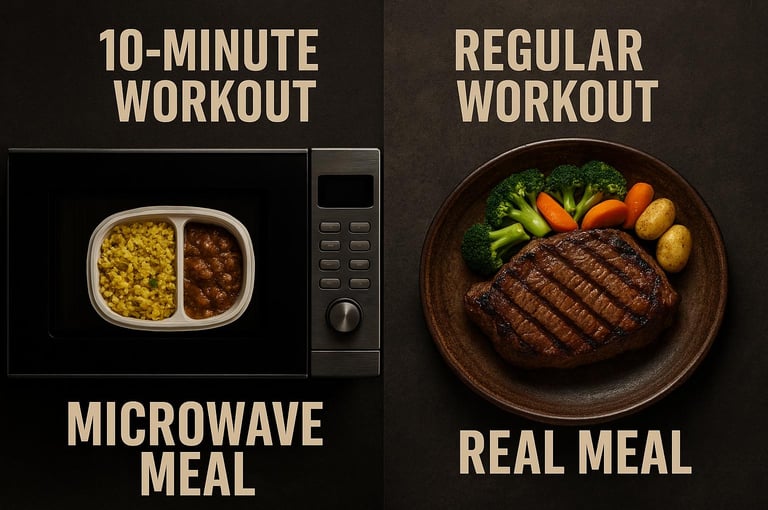
Most people treat fitness like a microwave dinner-quick, convenient, and just enough to quiet the guilt. A 10-minute workout fits perfectly into that mindset. It's fast. It's easy. It gives you the illusion of progress without demanding anything from you.
But here's the truth you already know in your bones:
A microwave meal doesn't build a body.
And a microwave workout doesn't build a warrior.
Now they say Pictures are worth a thousand words great I get that. But truth is black and white and it is written, stamped, and sealed in writing. So grunt it out with me. Lets play a word picture game.
Picture it.
You peel back the plastic.
You hit the button.
You wait for the beep.
You eat something warm, but not nourishing
You feel full, but not fueled
You move on, unchanged.
That's the 10-minute workout trend.
It fills the moment, but it doesn't feed the mission.
Your muscle don't get enough tension. Your lungs don't get enough demand. Your nervous system never enters the zone where adaptation happens. Your body gets the signal to "wake up," but never the command to Pr3detor Evolve.
A real workout-the kind that builds strength, confidence, and identity-is a meal cooked with intention. Heat, time, effort. Ingredients that matter. A process that transforms raw material into something powerful.
A 10-minute workout is a snack. A real workout is a feast!
Ladies and Gents you don't build a Pr3detor physique on snacks.
Because warriors aren't microwaved They're Forged!
What Actually Builds a Powerful Body
When it comes to developing a powerful and effective physique, many individuals are misled by the allure of quick workouts that promise instant results. However, the foundation of building a strong body is rooted in several key principles that go far beyond mere speed. One of the foremost concepts in strength training is progressive overload. This principle involves gradually increasing the stress placed on the body during exercise, ensuring continuous adaptation and growth. By challenging muscles with increased weights, repetitions, or intensity, individuals can achieve significant strength gains over time.
Another crucial aspect of building a powerful body is maintaining consistent training volume. This entails performing a sufficient amount of work during each session to stimulate muscle growth effectively. Striking a balance between volume and intensity is essential; too little can hinder progress, while too much can lead to overtraining. It is imperative to find a routine that allows for adequate stress without risking injury or burnout.
Equally important is the role of rest and recovery in muscle development. Engaging in rigorous workouts depletes energy reserves and induces micro-tears in muscle fibers. These fibers require time to repair and grow, emphasizing the necessity of incorporating rest days into any fitness program. Recovery is not merely inactivity; it includes proper nutrition, hydration, and sleep, all of which play pivotal roles in supporting long-term gains.
Moreover, mastering fundamental movement patterns is essential for optimizing training effectiveness. Exercises such as squats, deadlifts, and presses not only enhance muscular strength but also improve coordination, stability, and functional fitness. Finally, aligning fitness goals with long-term identity transformation is vital. Individuals who view fitness as a lifelong journey are more likely to develop sustainable habits that lead to lasting results, rather than relying solely on quick fixes that offer fleeting benefits.
Hidden Costs of the Quick Fix
In today's fast-paced society, the allure of quick workouts has led many individuals to pursue fitness solutions that promise immediate results. However, the hidden costs associated with these rapid approaches can be detrimental to long-term health and well-being. One of the primary concerns is the increased risk of injuries resulting from improper form. When individuals rush through exercises, they often neglect the fundamental principles of safe movement, leading to strain and overuse injuries that could sideline them for weeks or even months.
Moreover, quick workouts frequently prioritize high-intensity efforts without building foundational strength. This lack of emphasis on developing a strong muscular base may hinder progress, as individuals may not be equipped to handle advanced exercises safely. The neglect of core stability and flexibility contributes to imbalances in the body, further increasing the likelihood of injury. Individuals seeking quick fixes may find themselves caught in a cycle of ineffective workouts and recurrent injuries, ultimately undermining their fitness goals.
Another critical aspect to consider is the potential for burnout. The high expectations and rapid timelines set by quick-fix workouts can create a pressure cooker environment that diminishes motivation. Many may experience disillusionment when the anticipated results fail to materialize as swiftly as promised. This feeling of disappointment can lead to a diminished sense of self-esteem, and those who feel they are not meeting their fitness goals may find it increasingly challenging to maintain a regular workout routine. As a result, the quick fix can ultimately produce more harm than good, leaving individuals feeling demoralized in their pursuit of health.
In summation, while quick workouts may seem appealing, the underlying issues associated with this approach warrant careful consideration. Building a sustainable fitness practice requires patience and a focus on proper technique, which ultimately yields more effective results over time.
Closing Thoughts on Consistency in Fitness
The pursuit of fitness is often marred by the allure of quick workouts that promise rapid results. However, as discussed throughout this blog post, it is the sustained commitment to regular exercise that truly fosters lasting change. Quick workouts can serve a purpose, such as maintaining a minimal level of fitness or fitting into a busy schedule. Nevertheless, they should not be viewed as a substitute for a well-rounded, consistent fitness regimen. The key to achieving one’s fitness goals lies not in the speed of workouts, but in the dedication to a long-term, ongoing process of improvement.
Regularity in fitness practices ensures that the body adapts to physical demands progressively, which is essential for both skill acquisition and strength building. This consistent approach yields benefits that transient quick workouts cannot match, such as significant improvements in muscular endurance, flexibility, and overall cardiovascular health. It is crucial for individuals to recognize that effective fitness is the product of persistence and commitment, rather than fleeting moments of intensity.
Additionally, building a habit of regular exercise instills a positive mindset that transcends the physical benefits. It empowers individuals to view fitness as an integral aspect of their daily lives, rather than merely a task to check off. As readers reflect on their fitness journeys, the emphasis should be placed on cultivating an enjoyable routine that can be sustained over time. By focusing on the process of continual improvement, both mentally and physically, individuals are more likely to experience growth. Thus, as one embarks on their health and wellness path, remember that true fitness mastery is rooted in consistency rather than the swift gains promised by quick workouts.

PR3DETOR
Tribe-Driven. Archetype-Based. Challenge-Built.
Privacy Policy
(C) 2026 Pr3detor. All rights reserved.
Support: Support@pr3detor.com Built for the Tribe.
LEGAL
About Us